
The Crack, and the Air
Jul 13, 2026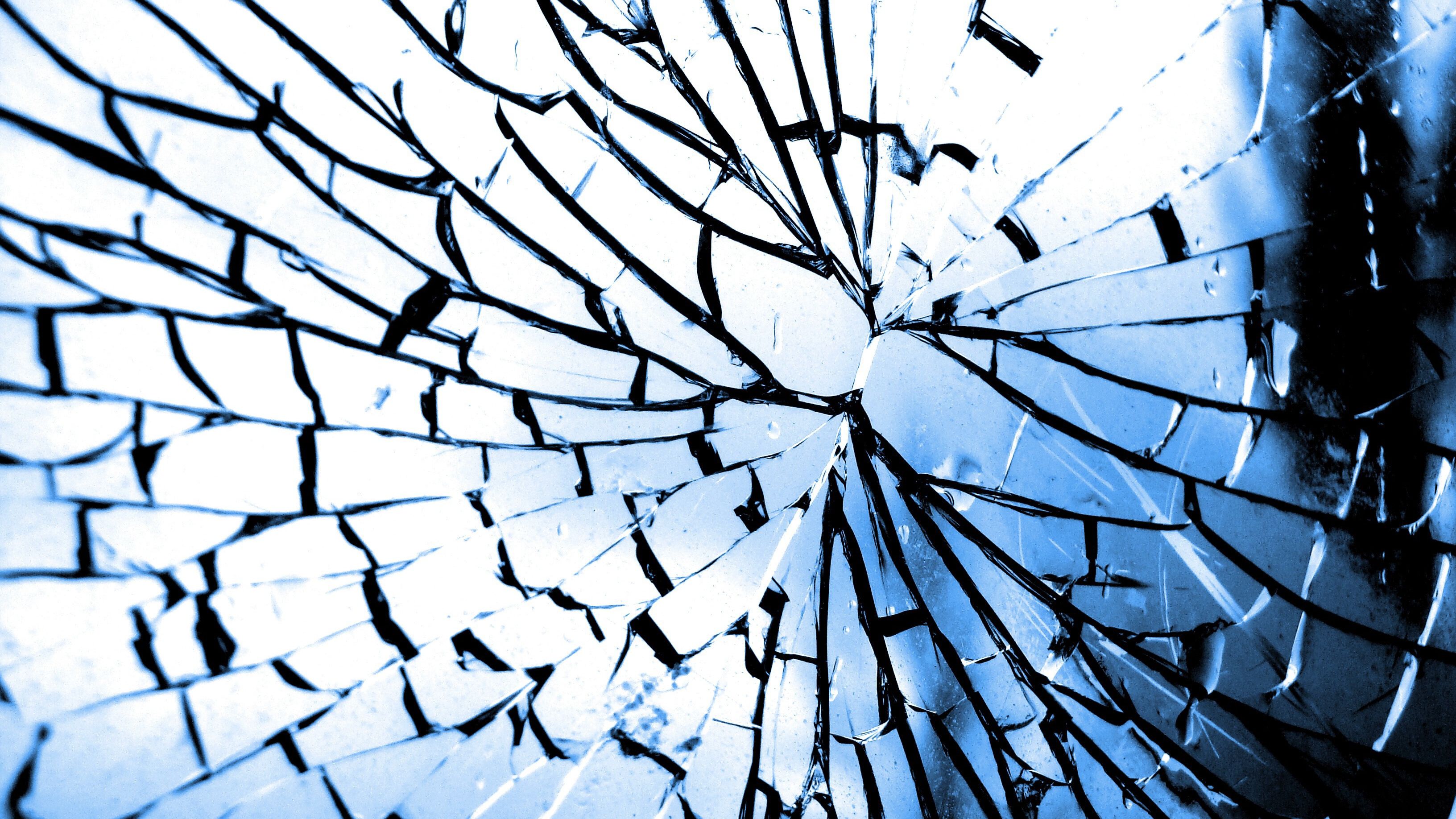
Why reframing changes your body — and how Sarah Peyton says the same thing in a completely different language
What if it isn't etched in stone?
The thing that happened to you. The one you've carried so long it stopped feeling like a memory and started feeling like a fact about who you are. What if it could be reframed — or released — in a way that felt real, and true, and settled? Not papered over. Not looking on the bright side. Actually changed, in the place where it lives in you.
I know how unlikely that sounds. Some of what we carry feels welded on — permanent, load-bearing, part of the architecture. And the pattern it drives feels just as fixed: the wound, and then, somewhere down the line, the reach for food that's been faithfully soothing it for years. This is just how I am. This is just what happened. It doesn't have another side.
I want to show you why that isn't the whole truth — and I don't mean with a pep talk. I mean with the actual mechanism, the one happening in your brain every time you so much as remember. Because it turns out the past is not as carved as it feels. And the same thing that can soften a single hard memory is the thing that can loosen a pattern you were sure would own you forever.
I'll show it to you through two very different maps — one from neuroscience, one from Sarah Peyton — that turn out to be the same map.
What your brain is actually doing
For most of the last century, we thought memory worked like carving. A thing happens, it hardens into place, and once it's set, it's set. You could bury it or paint over it, but the original carving stayed underneath, permanent.
Then researchers found something that reshaped how we understand memory. It's called memory reconsolidation.
Here's the short version. Every time you pull up a memory, you don't press play on a recording. You pull the memory into a temporarily unstable state — and then your brain has to write it back down to keep it. And in that small window between recalling it and re-storing it, the memory is briefly editable. Whatever you feel or understand in that moment of remembering can get folded in as the memory re-saves.
The old version isn't refreshed unchanged. It's rewritten — a little — every single time you visit it.
But here's the part that matters most, and it's the part most people get wrong: remembering alone doesn't change anything. You can replay a painful memory a thousand times and only wear the groove deeper. That's not healing. That's rehearsal.
What actually opens a memory to revision is remembering it and then meeting something that doesn't fit. The memory predicts one thing — I'm bad, I'm alone, this proves it — and something arrives that violates the prediction. That mismatch, that little jolt of wait, that's not how I thought it was, is what lets new information get written in.
No mismatch, no change. Just the groove, getting deeper.
This is what a reframe actually is
I've been teaching reframing for years, and I only recently understood that I've been teaching reconsolidation the whole time. I just called it something else. I called it cracking the box.
Certainty is the box. When you're sure something about yourself is simply, factually true — I have no willpower, I always ruin things, I'm too much — the case is closed, and a closed case doesn't get looked at again. The certainty is where the pain lives, and it's also what keeps the memory locked.
A reframe doesn't argue with the memory. It doesn't prove a cheerier story. It introduces the mismatch. You recall I snapped at my kid, I'm a bad mother — and beside it lands I was running on no sleep and still got everyone out the door. Same morning. Prediction violated. And in that violation, the certainty cracks — and in the crack, there's air.
You don't have to believe the new story. That was never the job. You just have to stop being sure of the old one long enough for the memory to loosen. Stopping being sure is the destabilization. The little flicker of huh, I hadn't thought of that — that's the case reopening.
And then one more step, the one people skip: you have to let the new version settle. In the reframing work we call it practice — saying the truer sentence again, on purpose. That's not busywork. That's the memory re-storing itself in its new form. The write-back. Skip it, and the old version quietly saves itself right back the way it was.
You don't have to live in the trigger forever
Here's what I most want you to take from this, and I want to say it plainly, because I think you've been told the opposite your whole life.
The trigger that sends you to food is not a life sentence. It is a memory.
Think about what that path actually is. Something happens — you feel rejected, or too much, or not enough — and your body reaches for the thing that has reliably brought relief. That's not a character flaw and it's not a lack of willpower. It's a groove. A learned association, walked so many times it runs without you. Feel this, do that. Your nervous system built it on purpose, back when it needed the fastest regulation it could find, and it has been faithfully re-running it ever since.
But a groove is a memory. And memories, as we just saw, are not carved. They are re-written every single time they're visited.
Which means the loop is not closed. Every time that trigger fires and you notice it — really notice it, instead of disappearing into it — you've pulled the whole pattern into that unstable, editable window. And in that window, something other than this is just who I am can get written in. Not the first time. Probably not the tenth. But the groove that took years to wear can be worn, gradually, in a different direction — because the very act of revisiting it with awareness is the act that makes it editable.
This is why I will not tell you to white-knuckle your way past a craving. White-knuckling keeps the memory closed — you're gripping it shut, defending against it, and a defended memory can't change. What changes it is the opposite of a grip. It's turning toward the trigger with curiosity and a little warmth, letting the old certainty destabilize, and letting something truer settle in beside it.
And here's the hinge, the part that's easy to miss: this shifts when you're ready to let it.
I don't mean that as soft encouragement. I mean it mechanically. Reconsolidation needs an open memory, and a memory only opens when you stop clamping down on it. Readiness isn't a nice-to-have — it's the doorway. As long as some part of you needs the old story to stay exactly where it is, needs to keep being sure, the window won't open, and no amount of forcing will pry it. That's not failure. That part has its reasons, and they deserve respect. But the day some part of you is willing to be a little less sure — that's the day the whole thing becomes possible.
You are not doomed to walk that path to the kitchen forever. You never were. You were running an old program, brilliantly, and old programs can be updated by the very brain that wrote them.
Sarah Peyton says the same thing — in the language of love
Here's where it gets beautiful.
Sarah Peyton — whose work on alarmed aloneness and resonance sits underneath everything I do — has a practice she calls time travel. It's a guided meditation for the memories that snag you, the ones that suck you back into the past and still sting. And when you read it closely, she's describing memory reconsolidation exactly. She just reaches it through warmth instead of through neuroscience.
Watch how the maps line up.
She begins by having you freeze time in the memory — and she tells you why. These memories, she says, can run on an infinite replay loop, and the continual reinforcement of harm has to stop before anything can move. That's the neuroscience's warning in plain words: remembering on a loop, with nothing new entering, only deepens the groove. She freezes the frame precisely so something new can come in.
Then she brings in what she calls the resonating self-witness — the most patient, warm, understanding version of you, arriving beside your younger self. And this is the mismatch. Your younger self is braced for exactly what happened the first time: judgment, aloneness, something is wrong with me. What arrives instead is an ally, asking whether the feelings make sense, letting the younger self know they matter. The memory predicted abandonment and got accompaniment. That violation, in the open window, is what lets it rewrite.
She's cracking the box too. She's just doing it with resonance instead of a reframe.
And at the end, she asks the question that tells you whether it worked: Does it still have a sting? Or has it become just another memory? If it still stings, she says, the work isn't finished — come back when there's more understanding, or more accompaniment. She doesn't force it. And that restraint is the most important part, because it's true to how the brain actually works: if the mismatch can't get in, the memory won't destabilize, and pushing harder just re-runs the harm.
Three languages. One mechanism. Peyton reaches it through resonance. The neuroscience reaches it through retrieval-and-mismatch. I reach it through certainty is the box, and in the crack there's air. The crack is the open window. The warmth, or the reframe, is the mismatch. The settling — the shoulders dropping, the deeper breath, just another memory now — is the new version saving itself down.
An honest word about the science
I won't oversell this, because overselling is its own kind of closed box.
Reconsolidation is real and well-supported — that memories destabilize when recalled, and that a mismatch is required to update them, is solid ground. What's not settled is the tidy promise you sometimes hear: reactivate a wound, introduce the new information, and rewrite a lifelong trauma in a single sitting. The human research is still working out how old a memory can be, how strong, how long the window really stays open. So I'll say what's true and stop there: remembering with warmth, or with a truer frame, can change how a memory lives in you. Sometimes in one pass. Often over many. And forcing it doesn't speed it up — it just closes the lid again.
That's not a smaller claim. It's an honest one. And it's still enormous — because the pattern you were sure was permanent can change, especially as you become ready to let it, is a very different life than this is just how I am. One is a locked door. The other is a door that opens when you're ready to walk through it. I'm only asking you to believe the honest version, because the honest version is already more than enough.
If you want to feel it, not just understand it
Reading about this is one thing. Feeling it is another — and the felt version is where the change actually lives.
If you'd like to try Peyton's version, her Time Travel meditation is free on Insight Timer — about ten minutes, led in her extraordinarily gentle voice, at insighttimer.com/resonantself. She also has an Inner Critic meditation and a Resonating Self-Witness meditation there that pair beautifully with the work we've been doing on the protector — the voice that was only ever trying to keep you safe.
One caution, offered with love. Peyton's time-travel practice is built for trauma and intrusive memories, and it walks you toward a younger self who may be frightened or frozen. That's deep water. If you're carrying something heavy, this is work to do with support — a therapist, a trusted person — not alone in a hard moment. The gentle version is real too: you can bring this same warmth to the day before yesterday, to an ordinary sticky moment, and learn the move where the stakes are low. That's exactly how we practice reframing, and for the same reason. You learn it where nothing much is at stake, and then you have it when something is.
Whichever door you walk through — the reframe, the resonance, the science — you're doing the same thing. You're catching a story you'd stopped questioning. You're loosening your grip just enough to let a little air in.
You don't have to believe the new story. You just have to stop being sure of the old one.
You were never broken. You were biological.
With love and light,
Sonja
If this work stirs something tender, the door is open — reach for your community, or for me. For anyone holding on for dear life, there's a clinician-staffed helpline and referral database at findEDhelp.com. Offered with love, never a push. And don't forget to check out the Advanced Recovery Project where we learn and practice this every day.
Sources and further reading: Sarah Peyton, Your Resonant Self and Your Resonant Self Workbook (W. W. Norton). On memory reconsolidation, the foundational work of Karim Nader and colleagues, and Bruce Ecker's writing on its use in therapeutic change.
Stay connected with news and updates!
Join our mailing list to receive the latest news and updates from our team.
Don't worry, your information will not be shared.
We hate SPAM. We will never sell your information, for any reason.